
 Blog details

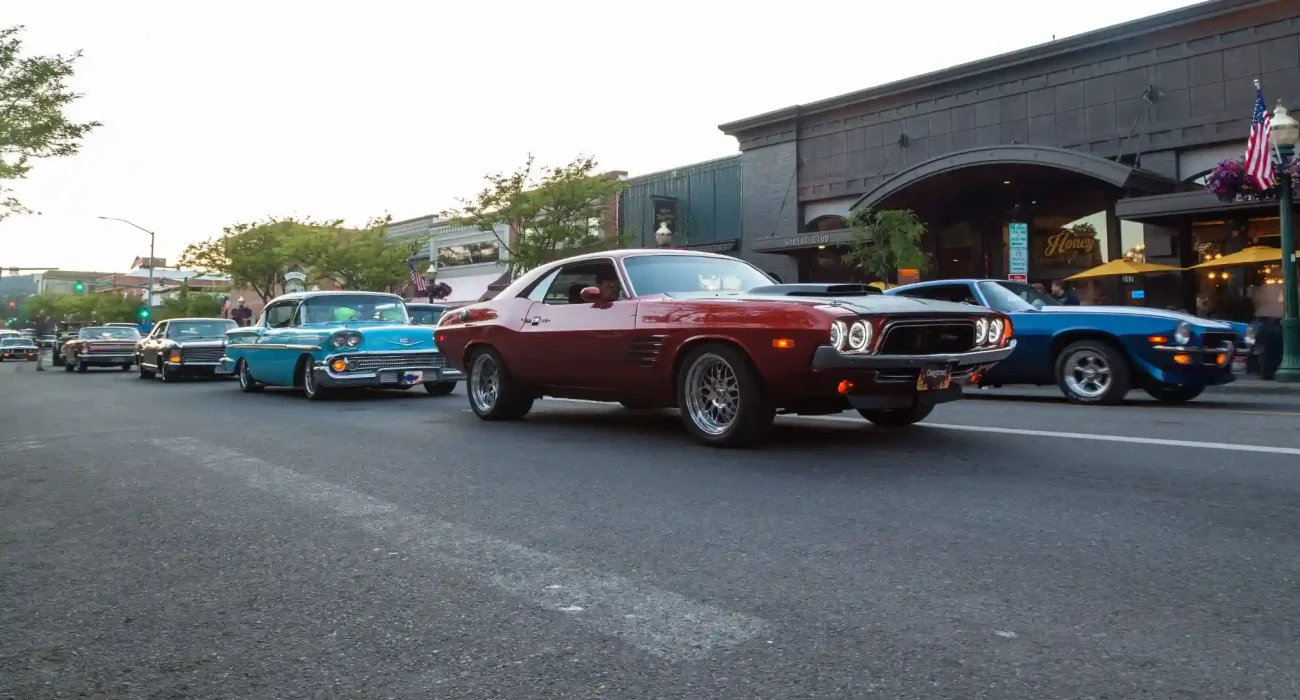
There is no sound quite like a big-block V8 pulling hard through second gear. It is loud, mechanical, and completely unapologetic. Modern performance cars are faster, more efficient, and more technologically sophisticated. But they do not produce that feeling. That is exactly why vintage muscle cars continue to command serious collector attention decades after the last true example rolled off the line.
This guide covers the origins of the genre, the models that defined it, why the era ended so abruptly, and what separates a genuinely valuable example from a common one in today’s market.
What Made American Muscle Different
The muscle car formula was deceptively simple. Take a mid-size body. Drop in the largest displacement engine the platform could handle. Price it so a young buyer with a regular income could actually afford one. Then repeat that formula across every division in Detroit until the competition forced everyone to keep raising the stakes.
What separated vintage muscle cars from European performance vehicles of the same era was accessibility. A Pontiac GTO or a Dodge Charger was not an exotic. It was attainable. That combination of raw performance and democratic pricing created something no other automotive culture has replicated in quite the same way.
The rivalry between Ford, General Motors, and Chrysler was not just marketing. Engineers at each company were genuinely competing to outperform each other. That competition produced some of the most technically ambitious production engines ever built for street use, and it happened within a compressed window of roughly ten years.
The Birth of the Muscle Car Era
The 1964 GTO and the Template That Followed
The origin story is well documented but worth understanding precisely. John DeLorean, then at Pontiac, made the decision to install a 389 cubic inch engine into the Tempest body and sell it as the GTO. General Motors had a corporate policy against mid-size cars competing in displacement above a certain threshold. DeLorean worked around it by positioning the GTO as an option package rather than a standalone model.
The market responded immediately. Pontiac sold far more GTOs in 1964 than anyone had projected. Ford, Dodge, and Plymouth all recognized what had happened and began their own responses within months. The muscle car era did not evolve gradually. It ignited.
From Street to Strip: The Drag Racing Connection
NHRA drag racing was the proving ground where the muscle car formula was tested and refined. Factory race programs at Ford, Chrysler, and GM were not separate from showroom development. They informed it directly. Engines developed for competition found their way into production option packages. The Super Stock and Factory Experimental classes created a direct feedback loop between what won on Saturday and what buyers could order on Monday.
This connection to motorsport gave vintage muscle cars a credibility that pure styling exercises lacked. These vehicles were genuinely fast in a documented, competitive context. That heritage is a meaningful part of what collectors pay for today.
The Defining Models That Built the Legend
The Ford Mustang is often the entry point for new muscle car enthusiasts, and the 390 GT and Shelby GT500 variants represent the moment the platform crossed from pony car into genuine performance territory. The Boss 429 remains one of the most mechanically significant engines Ford ever put into a production vehicle.
The Chevrolet Chevelle SS 454 with the LS6 option is widely considered the benchmark for big-block performance in the classic era. Documented LS6 examples are among the most actively pursued muscle cars in the current market, and values reflect that.
Chrysler’s Mopar division competed differently. The Dodge Charger R/T and Plymouth Road Runner prioritized power and personality over refinement. The 426 Hemi was not a comfortable engine. It was demanding, expensive to maintain, and uncompromising. That is precisely why a documented Hemi car commands a premium that few other muscle cars can match.
The Pontiac GTO and Firebird Trans Am bookend the genre’s timeline. The GTO started the era. The Trans Am, particularly the 1969 and 1970 Ram Air variants, represented the formula at its most developed. The overlooked GM muscle cars, the Buick GSX Stage 1 and Oldsmobile 442 W-30, deserve more attention than they typically receive. Both offered legitimate performance credentials and remain undervalued relative to their Chevrolet counterparts.
The Golden Era and Its Sudden End
Insurance Rates, Emissions, and the 1971 Compression Drop
The end came from multiple directions simultaneously. Insurance companies began targeting high-displacement vehicles driven by young male buyers with actuarial data that justified significant premium increases. For many buyers, the insurance cost made ownership impractical regardless of the purchase price.
The technical turning point was 1971. Every major manufacturer dropped compression ratios across their performance engines to accommodate the transition to low-lead and unleaded fuels. Horsepower figures that had been climbing through 1970 fell sharply within a single model year. A 1970 LS6 Chevelle produced 450 horsepower from the factory. The same platform in 1972 was a fundamentally different car.
The Oil Crisis and the Final Curtain
The 1973 oil embargo accelerated what was already in motion. Fuel economy became the primary consumer concern almost overnight. Large displacement engines became liabilities rather than selling points. Manufacturers shifted resources toward smaller, more efficient platforms. The high-displacement performance era did not fade. It stopped.
This is why 1970 holds its position as the peak year for factory muscle car performance. The compression ratios were still high. The option packages were still available. The regulatory environment had not yet fully closed. A 1970 example of almost any significant muscle car represents the formula at full expression.
What Collectors Look for in Vintage Muscle Cars
Numbers matching is the starting point for any serious evaluation. The engine stamp, VIN derivative, and transmission code must correspond to original factory documentation. A car with a replaced engine is not a dealbreaker at the right price, but it is a fundamentally different purchase than a matching numbers example.
Factory build sheets, window stickers, and model-specific decoder reports, such as Marti Reports for Ford vehicles and PHS documentation for Pontiac, authenticate rare option combinations. High-option packages carry disproportionate value. A base model and an identically bodied car equipped with Ram Air, an LS6, a 426 Hemi, or a Boss 429 engine exist in completely different market tiers.
Documentation often matters more to serious buyers than cosmetic condition. A well-documented original example with honest wear is more desirable to the top tier of the market than a heavily restored car with uncertain history.
The Muscle Car Market Today
Which Models Are Appreciating and Why
Documented Hemi cars, LS6 Chevelles, and Shelby variants continue to set records at major auctions. Barrett-Jackson, Mecum, and RM Sotheby’s all report consistent demand from buyers entering peak earning years who grew up with these vehicles as aspirational objects. That demographic shift is driving values upward on previously overlooked models.
Second-tier muscle cars are the current opportunity. The Buick GSX, Oldsmobile 442, and mid-range Pontiac performance variants are attracting buyers who recognize the value gap between them and their Chevrolet equivalents. That gap is narrowing.
The Resto-Mod Question
Resto-mods serve a different buyer entirely. A vintage muscle car body fitted with modern suspension, fuel injection, and updated brakes is a more practical vehicle than a factory original. It drives better, stops better, and requires less specialized maintenance. The buyer who wants to use the car regularly often finds a resto-mod more satisfying.
But resto-mods do not appreciate the way documented originals do. The collector premium is tied to authenticity. A modified car, however well executed, steps outside the category that commands top market value. Both approaches are valid. They just serve different purposes and different buyers.
Owning a Vintage Muscle Car: What Nobody Tells You
Fuel consumption is substantial. A big-block engine running correct carburetion and timing is not a vehicle you commute in daily without noticing the cost. Maintenance requires a mechanic with genuine experience on period-correct engines and drivetrain components. A general repair shop that works on modern vehicles is not the right resource for a numbers-matching 1969 Camaro.
The community surrounding vintage muscle cars is one of the most knowledgeable in the collector world. Marque-specific clubs, online registries, and model-dedicated forums hold decades of accumulated technical knowledge. Connecting with that community before and after purchase makes ownership significantly more manageable. The collective expertise available to a Mopar, Ford, or GM muscle car owner through established clubs is a genuine ownership resource, not just a social benefit.
Conclusion
Vintage muscle cars represent a specific and irreplaceable chapter in American automotive history. The era lasted roughly a decade. The vehicles it produced have outlasted the cultural conditions that created them by more than fifty years and show no sign of losing relevance.
The best entry point into this market combines personal passion with disciplined research. Attend a major muscle car auction or a regional show before committing to a purchase. Spend time around the cars and the people who know them. The education you get in a single day at a serious event is worth more than weeks of online research alone.