
 Blog details

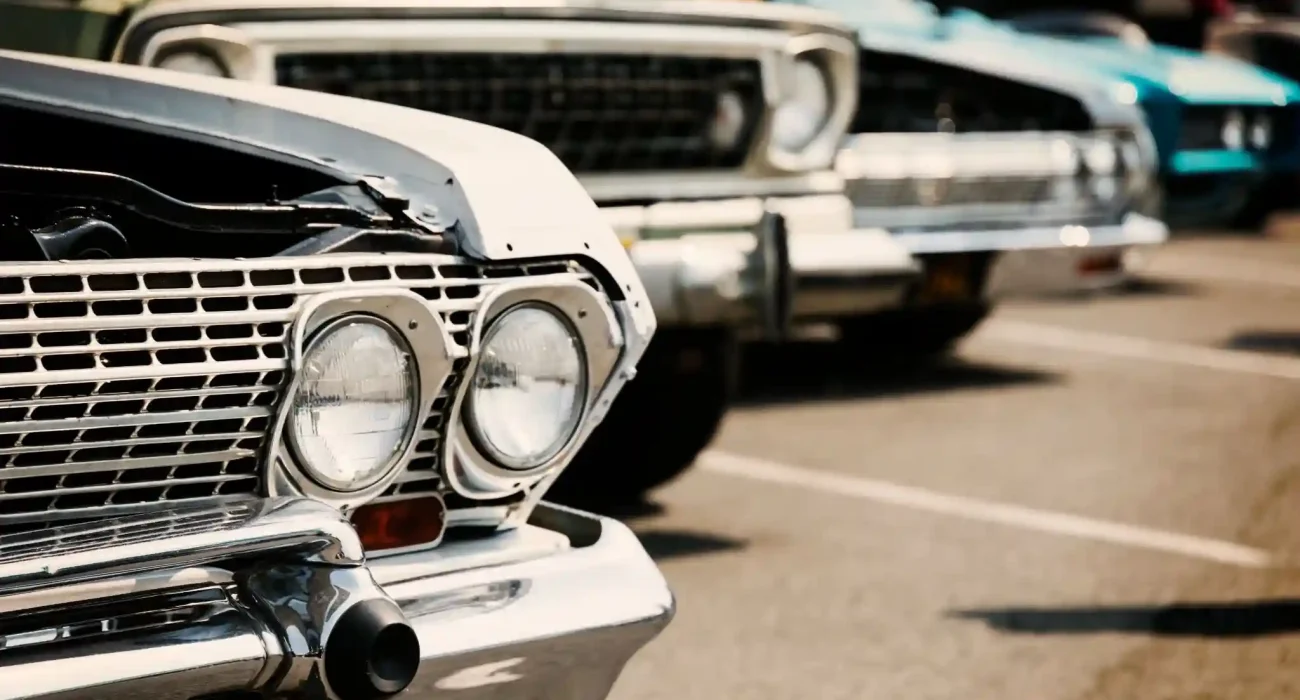
There is something about a vintage car that a modern vehicle simply cannot replicate. The sound, the weight, the craftsmanship, the feeling that every part was built with intention. People do not collect vintage cars because they are practical. They collect them because they are alive in a way that contemporary machines are not.
But enthusiasm alone does not make you a smart buyer or a capable owner. This guide covers everything you need to know about vintage cars, from understanding what the term actually means to buying, restoring, insuring, and joining a community that takes this passion seriously.
What Qualifies as a Vintage Car
The word “vintage” gets used loosely. In casual conversation, people apply it to anything old. In the collector world, it carries a much more specific meaning.
The Age and Era Breakdown
Most collector organizations draw clear lines. The Antique Automobile Club of America considers vehicles 25 years or older to be antique. The FIA defines vintage as pre-1931. Insurance companies often use their own thresholds, typically requiring a vehicle to be at least 20 to 25 years old before qualifying for classic car policies.
A working general framework: pre-1930s vehicles fall under the vintage category, 1930s through 1970s vehicles are broadly called classics, and post-1980s collectibles occupy an emerging category sometimes called modern classics or future classics.
How Vintage Differs from Classic and Antique
The distinction matters more than most new enthusiasts realize. Insurance eligibility, show class placement, registration exemptions, and parts sourcing all depend on how a vehicle is officially categorized.
A car registered as a historic vehicle in one state may not qualify for the same status in another. Before purchasing, verify how your state defines the category and what restrictions or benefits come with it. Some historic plates limit annual mileage. Others require proof of a separately registered daily driver.
A Brief History of Vintage Automobiles
Understanding where vintage cars come from sharpens your ability to evaluate, buy, and appreciate them.
The Pioneer Era (1890s to 1910s)
The earliest automobiles were experiments. Manufacturers like Benz, Panhard, and Oldsmobile were solving basic engineering problems in real time. Reliability was inconsistent. Speed was modest. But the foundations of modern automotive design were being laid.
Vehicles from this era are extraordinarily rare today. Most exist in museum collections. When they do appear at auction, they command significant prices driven almost entirely by historical significance rather than performance.
The Classic Golden Age (1920s to 1940s)
This is where automotive design became art. Art Deco principles shaped everything from hood ornaments to body lines. Marques like Packard, Bugatti, Duesenberg, and Bentley produced vehicles that were as much sculpture as transportation.
Coachbuilding was standard practice. Wealthy buyers purchased a rolling chassis and hired a separate firm to design and build the body. No two cars were identical. This era produced some of the most visually striking automobiles ever made, and the market reflects that.
The Muscle and Chrome Era (1950s to 1960s)
Post-war prosperity transformed the American automobile. Designs became bolder, longer, and more expressive. Tailfins appeared. Chrome was everywhere. The car became a cultural statement as much as a functional object.
By the late 1950s, performance entered the conversation. Displacement grew. The muscle car era was beginning. Ford, Chevrolet, and Dodge started a horsepower competition that defined an entire generation of American automotive culture.
Most Sought-After Vintage Car Models
Collectibility is driven by a specific combination of factors: rarity, design significance, racing heritage, and cultural presence.
The Ford Model T matters because it democratized personal transportation. The 1957 Chevrolet Bel Air matters because it captures postwar American optimism better than almost any other object from that period. The Mercedes-Benz 300SL Gullwing matters because its engineering was genuinely ahead of its time. The Jaguar E-Type matters because Enzo Ferrari reportedly called it the most beautiful car ever built.
Film and television appearances also shape desirability in measurable ways. A model featured prominently in a well-known film can see its market value shift within years of release. Steve McQueen’s association with the Ford Mustang 390 GT and the Porsche 917 elevated both models permanently.
When researching which model to pursue, separate emotional appeal from investment logic. Both are valid reasons to buy. Conflating them leads to poor decisions.
How to Buy a Vintage Car the Right Way
The vintage car market rewards patient, informed buyers and punishes impulsive ones.
Researching the Right Model for Your Goals
Define your purpose before you define your budget. A show car requires a different standard of originality than a weekend driver. A restoration project demands mechanical knowledge or a willingness to fund specialists. An investment vehicle requires understanding production numbers, auction histories, and market trajectory.
Research surviving examples. Some models were produced in large numbers but have very few roadworthy survivors today. Others were low-production vehicles with strong marque clubs that have kept many examples alive and documented. Production numbers alone do not tell the whole story.
Pre-Purchase Inspection Essentials
Never buy a vintage car without an independent specialist inspection. This is the single most important rule in the market. A seller’s enthusiasm and a clean visual presentation are not substitutes for a professional assessment.
Focus the inspection on frame integrity, rust penetration, drivetrain condition, and parts originality. Numbers matching refers to whether the major components, particularly the engine and transmission, carry serial numbers that correspond to the original build records. A numbers-matching vehicle commands a significant premium. A replaced engine is not necessarily a dealbreaker, but it must be reflected in the price.
Documented ownership and service history adds meaningful value. A car with a clear, traceable paper trail is easier to insure, easier to sell, and easier to authenticate for show judging.
Vintage Car Restoration: What to Expect
Restoration costs and timelines almost always exceed initial estimates. Plan for it.
A cosmetic refresh, addressing paint, interior, and chrome without touching mechanical systems, is the lightest intervention. A full frame-off restoration means stripping the vehicle completely, restoring or replacing every component, and rebuilding from the ground up. The latter can take years and cost more than the finished vehicle’s market value.
Sourcing parts is one of the most persistent challenges. Original components for pre-war vehicles can be extremely difficult to find. Quality reproduction parts have improved significantly and are acceptable in most contexts outside of concours-level judging. Marque-specific clubs are often the best sourcing resource available, connecting buyers with parts specialists, restoration shops, and fellow owners parting out project cars.
Know your limits before you start. A full restoration attempted without the right skills, tools, or support network rarely ends well.
Insuring and Registering a Vintage Car
Standard auto insurance is the wrong product for a vintage car. It uses actual cash value to calculate payouts, which penalizes older vehicles regardless of their true market value.
Agreed value policies, offered by specialty insurers like Hagerty and Grundy, set a fixed payout amount at the time the policy is written. If the vehicle is totaled, you receive the agreed amount without depreciation arguments. This is the correct approach for any vehicle with meaningful collector value.
Most specialty policies include mileage restrictions and storage requirements. Some require the vehicle to be garaged. Read the terms carefully. A claim denied due to a policy technicality on an irreplaceable vehicle is a painful and avoidable outcome.
The Vintage Car Community and Show Culture
The community surrounding vintage cars is one of the most accessible parts of the hobby. Entry points exist at every level.
Regional club events and local car shows require nothing more than showing up. Concours events like Pebble Beach Concours d’Elegance, the Amelia Island Concours, and the Goodwood Revival represent the top tier of the hobby globally. Attending as a spectator before you own anything is genuinely useful. You will learn more in a single day at a serious event than weeks of online research.
Online registries and marque-specific forums hold decades of accumulated knowledge. For obscure models, these communities are often the only reliable source of technical documentation, parts leads, and restoration guidance.
Participation in the community also has a measurable effect on long-term ownership value. Documented provenance, show history, and marque club membership all contribute to a vehicle’s desirability at resale.
Are Vintage Cars a Good Investment
Some are. Most are not, at least not in purely financial terms.
Blue-chip collectibles, pre-war coachbuilt vehicles, low-production European sports cars, and numbers-matching American muscle from the 1960s have shown strong long-term appreciation. But these represent a small fraction of the market. The average vintage car, once storage, insurance, maintenance, and restoration costs are factored in, rarely outperforms a straightforward financial investment.
Conclusion
Vintage cars are not just old vehicles. They are physical records of engineering ambition, cultural identity, and human craftsmanship at specific moments in history. Owning one connects you to something larger than transportation.
The path into this hobby rewards patience, research, and community engagement. Start with the model you have always been drawn to. Learn its history, understand its market, and find the people who already know it well. The first step is simply paying closer attention to what already interests you.