
 Blog details

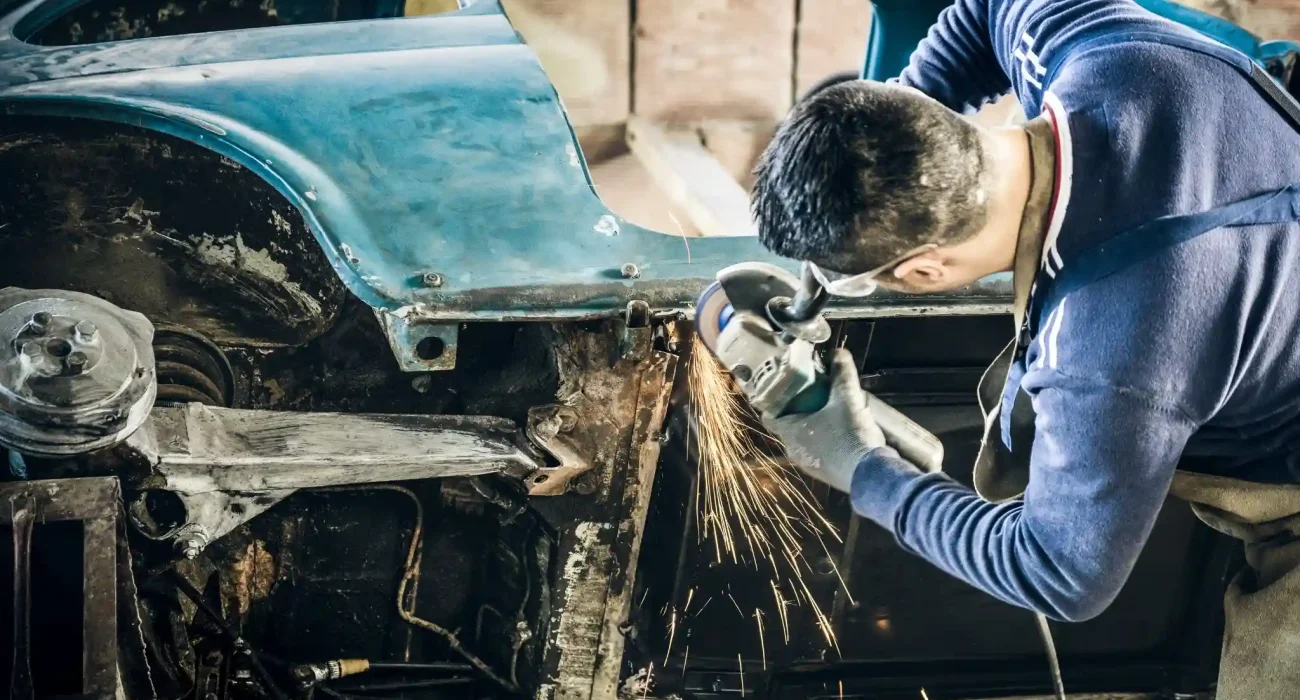
The moment you find the right project car, the excitement is real. A neglected 1965 Mustang sitting in a garage. A pre-war Packard that has not moved in decades. The vision of what it could become takes over quickly. Then the estimates start coming in.
Vintage car restoration cost is one of the most searched and least honestly discussed topics in the collector car world. Numbers get thrown around without context. Sellers understate what a project will need. First-time buyers underestimate what they are walking into. This guide gives you a transparent, phase-by-phase breakdown of what restoration actually costs, why the numbers vary so dramatically, and how to build a budget that holds up to reality.
Why Restoration Costs Vary So Dramatically
No two restoration projects cost the same. That is not a dodge. It is the most important thing to understand before any number means anything.
The Vehicle Itself Changes Everything
A 1957 Chevrolet Bel Air and a 1934 Bugatti Type 57 are both vintage cars. Their restoration costs exist in completely different financial universes. The Bel Air has an enormous parts supply, strong marque club support, and thousands of qualified shops familiar with the platform. The Bugatti requires European specialists, custom fabrication for nearly every worn component, and documentation research that alone can run into serious money.
Even within the same model, the condition at purchase creates massive cost variation. A car with solid floors, intact body panels, and a complete drivetrain is a fundamentally different project than one with structural rust, missing components, and a seized engine. Purchase price is not a reliable indicator of total project cost. A cheaper car in worse condition almost always costs more to restore than a more expensive car in better shape.
Restoration Level Sets the Budget Ceiling
There are three meaningful tiers in vintage car restoration. A driver quality restoration brings a vehicle to reliable, presentable condition without chasing perfection. A show quality restoration involves higher standards of finish, correct materials, and documentation for judging purposes. A concours level restoration is a full-scale, historically accurate rebuild where every component is correct to factory specification and finish quality is essentially flawless.
Each tier represents a different standard of work, not just a different price. Moving from driver to show quality mid-project does not cost the difference between the two. It typically costs more than starting at show quality from the beginning. Scope changes mid-restoration are one of the most reliable ways to blow a budget.
Breaking Down the Cost by Phase
Bodywork and Paint Costs
Bodywork and paint consistently represent the largest single cost in most restorations. Shop rates for metalwork range from roughly 75 to 150 dollars per hour depending on region and specialization. A driver quality paint job on a common American classic might run between 8,000 and 15,000 dollars including surface preparation. A full concours multi-stage finish on the same vehicle can reach 30,000 to 50,000 dollars or more.
The preparation labor is where most of the money goes, not the paint itself. Blocking, priming, guiding, and finishing a body to show standard takes hundreds of hours. Shops that quote low on paint are almost always cutting somewhere in the preparation process. That shortcut shows up within a few years.
Mechanical Restoration Costs
A basic engine refresh on a common V8 platform, replacing seals, gaskets, and wear items without machining, typically runs between 2,500 and 5,000 dollars in parts and labor. A full machine shop rebuild with new pistons, bearings, a reground crankshaft, and correct clearances can run 8,000 to 20,000 dollars depending on the engine and parts availability.
Drivetrain, brake, and suspension work adds another layer. A complete brake system restoration with correct hardware, rebuilt cylinders, and new lines typically runs 2,000 to 5,000 dollars. Suspension restoration on a postwar American classic falls in a similar range. European vehicles with less parts support run higher across every mechanical category.
Interior Restoration Costs
Interior work is where correct sourcing decisions have the biggest long-term impact on value. Quality reproduction upholstery on a common American muscle car runs between 3,000 and 8,000 dollars installed. Custom upholstery using period-correct materials and correct stitching patterns on a rarer vehicle can exceed 15,000 dollars.
Dashboard restoration, including gauge rebuilding, correct bezels, and proper hardware finishes, adds another 1,500 to 5,000 dollars depending on complexity. Using incorrect grain patterns or wrong-color materials saves money upfront and costs significantly more at resale. Show judges and serious buyers notice.
Labor Versus Parts: Where the Budget Really Goes
First-time restorers consistently underestimate labor relative to parts. On most professional restorations, labor represents 60 to 70 percent of total cost. Parts feel tangible. Labor feels like it should be controllable. It rarely is.
Pre-war and rare postwar vehicles push that ratio even higher. When parts require custom fabrication or extensive research to source correctly, the labor attached to procurement and installation compounds fast. Disassembly, cleaning, cataloging, and research hours are almost never included in initial estimates. They are real costs that show up on every invoice.
DIY labor changes the equation meaningfully on mechanical and disassembly work. A motivated owner with moderate skills can handle teardown, parts cleaning, basic assembly, and component research without risk to the final result. The phases where DIY genuinely creates risk are bodywork, paint, engine machining, and any structural metalwork. Mistakes in those areas cost more to fix than the original professional work would have.
The Real Cost of a Frame-Off Restoration
What Frame-Off Actually Involves
Frame-off means the body is completely separated from the chassis. Every component is disassembled, assessed, restored or replaced, and reassembled from the ground up. It is the most thorough restoration approach and the most expensive. There is no shortcut version of a frame-off.
The process typically adds 20 to 40 percent to total project cost compared to a body-on restoration at the same quality level. The additional cost comes from extra labor hours in disassembly and reassembly, more extensive access to hidden rust and structural issues, and the higher finish standards typically associated with frame-off projects.
Realistic Total Cost Ranges by Vehicle Type
A full frame-off restoration on a common American postwar classic, a 1955 to 1972 Chevrolet, Ford, or Mopar platform with good parts support, typically runs between 40,000 and 80,000 dollars at professional shop rates for a show-quality result.
Mid-tier muscle cars and desirable European sports cars from the 1960s and 1970s sit in the 80,000 to 150,000 dollar range for a thorough professional restoration. Pre-war and coachbuilt vehicles operate in a different category entirely. Full restorations on significant pre-war marques routinely exceed 200,000 to 500,000 dollars, and that figure is not unusual for complex projects at specialist shops.
Hidden Costs That Blow Most Restoration Budgets
Rust discovered during disassembly is the most common budget killer. A car that looks solid during inspection often reveals floor pan damage, frame corrosion, or structural issues once stripped. Custom fabrication for discontinued panels adds both parts cost and significant labor hours.
Storage during a multi-year project adds up quietly. Professional shop storage at 200 to 500 dollars per month over a two to three year project adds 5,000 to 18,000 dollars to the total before a single part is touched. Insurance on a vehicle under active restoration also requires attention. Standard policies often exclude vehicles in disassembled or non-operational condition, creating a coverage gap most owners do not discover until they need to file a claim.
Correcting previous amateur repairs is another consistent hidden cost. Prior bodywork done with incorrect filler depths, improper welding, or mismatched panels must be fully remediated before professional quality work can begin. You pay for the bad work to be removed and then pay again for it to be done correctly.
Conclusion
The cost of vintage car restoration is not a single number. It is the product of vehicle choice, starting condition, restoration level, parts availability, and how much of the work you handle yourself. Every one of those variables moves the final number significantly.
The most reliable way to protect your budget is to define your scope before you start, assess the vehicle thoroughly before you buy, and build a 30 to 40 percent contingency into every estimate. Connect with a marque-specific restoration specialist and get a professional appraisal before committing. The investment in preparation is the cheapest part of any restoration project.